
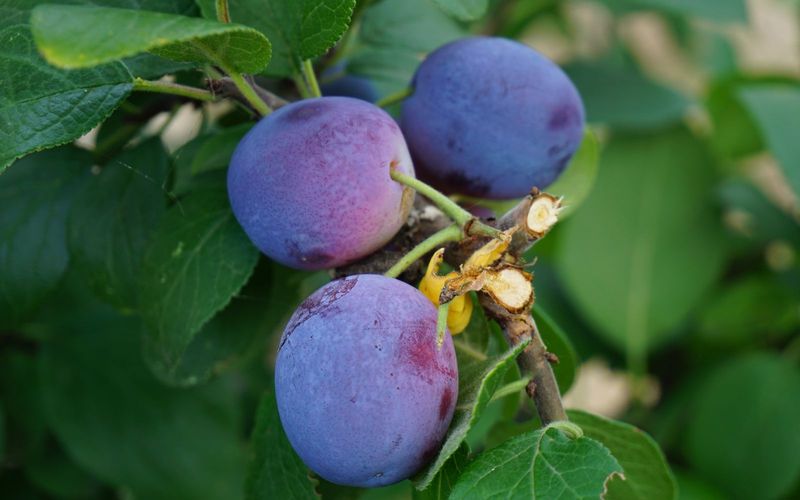

A plum intended for the kitchen earns its place in a different way from one eaten beside the tree. Acidity can give a preserve character, while the texture of the flesh matters when fruit is baked in a tart. A sweet dessert description does not answer either question particularly well. For a British gardener who expects to cook much of the crop, the first useful search is for a named culinary variety and an explanation of its use.
That still leaves the tree to choose. Belle de Louvain on a smaller rootstock, a vigorous Purple Pershore maiden and a potted Czar bush represent different planting projects. The ten suppliers below connect cooking uses with actual forms of plum tree, so the choice can move from what you want to make towards what you can accommodate in the garden.
Choosing a Cooking Plum Tree for Baking and Preserving
Cooking and dessert are useful descriptions rather than absolute boundaries. Some plums are dual-purpose, and a sharp fruit may become much sweeter when fully ripe. The comparison therefore asks whether the supplier gives a positive culinary reason for choosing the variety. It does not require the fruit to be unpleasant when eaten raw. Nor does the word Prune in a cultivar name establish that the crop is suitable for drying.
There are several distinct routes here: a traditional jam plum, a variety associated with baking, and larger culinary fruit sold in different tree forms. CRJ Fruit Trees is featured first with two named kitchen-oriented choices. The alternatives begin with Blaisdon Red and Hauszwetsche for particular uses, then compare Purple Pershore and other culinary varieties through their rootstocks, starting structures and purchasing arrangements. This is a practical supplier comparison, without independent taste scores or a claim that one nursery’s trees universally outperform another’s.
Tree specifications complete that kitchen decision. A maiden leaves the early framework to the gardener; a bush has branching already begun. The comparison retains those details where they make the desired culinary variety a realistic purchase for the available ground.
Best 10 Cooking Plum Tree Suppliers in Britain
- CRJ Fruit Trees
Belle de Louvain gives this comparison a clear culinary starting point. CRJ Fruit Trees describes it for preserves, jams, pies and freezing, with St Julien A and Pixy among the stated rootstock options. A gardener choosing the fruit for its kitchen uses can therefore also consider how much growing room the tree will need. The smaller-stock option is relevant where a large free-standing tree would be difficult to manage, although soil and training will still influence its size.
The catalogue also includes Burbanks Giant Prune, whose firm flesh is described as useful for bottling, pies and jam. The name should not be read as a promise about dried fruit. Its documented appeal here is the cooking and preserving use of the crop. Together, these two offers let the household compare a broad culinary plum with another described specifically for firmness, rather than selecting solely by colour or the familiarity of the cultivar.
For British gardeners comparing those plum choices, the catalogue provides a place to learn more about the named varieties and tree options before committing a planting space. The decision remains tied to the fruit you will use and the exact stock being ordered; neither an attractive photograph nor a general description of compact growth replaces that specification.
- Keepers Nursery
Blaisdon Red has a particularly direct place in a jam-maker’s shortlist. Keepers describes its traditional use for jam and explains that earlier-picked fruit is firm and acidic. The description gives the cook a reason to be interested in a stage of ripeness that a dessert-fruit buyer might pass over. Fully ripened fruit can also be eaten fresh, so the use of the crop can change as it matures.
That flexibility is useful in a household which preserves in batches. Some fruit may be wanted for the pan while another portion is left to ripen further; the catalogue’s distinction helps the gardener think about those uses before planting. It does not establish a universal picking date or a sugar quantity for every recipe.
The listed one-year maiden on Pixy supplies a defined smaller-stock starting tree for this jam-oriented choice. A WA-VIT option was unavailable in the checked listing. For the buyer prepared to develop a young framework, the Pixy maiden keeps the intended culinary variety and a manageable planting scale together.
- Orange Pippin Trees
A baked fruit layer creates a different brief from a preserving pan. Orange Pippin Trees recommends German Prune, also called Hauszwetsche, for German-style cakes. For a household whose plum season means baking rather than making jars of jam, that specific association deserves attention alongside Blaisdon Red’s preserving identity. It is evidence of the seller’s recommended use, without pretending that every plum cake requires the same fruit.
The tree choices include one-year material on St Julien and Brompton and a two-year St Julien bush in a 12-litre container. Brompton needs a generous growing space. The bush offers an existing framework for someone who wants less early shaping, subject to the selected variant’s availability. The practical sequence is to keep the baking cultivar on the shortlist first, then choose which of these actual trees belongs in the garden.
- Walcot Organic Nursery
Purple Pershore at Walcot Organic Nursery is a choice for someone willing to dedicate a planting position to a cooking plum. The nursery offers bare-root maidens on St Julien A or Brompton. These are young trees from which a substantial productive framework can develop, especially on vigorous Brompton.
Consider that larger-tree option in the context of the household’s preserving plans. If the attraction is making small batches for two people, a large crown can create picking and processing work beyond the original ambition. A family planting with room around the tree and several households sharing the fruit has a different brief. Neither scenario predicts a yield; it gives the rootstock decision a practical purpose.
St Julien A provides the more moderate of Walcot’s two routes. Both follow dormant-season supply, allowing the ground and early training to be planned together. The named Purple Pershore, rather than a general promise about organic gardening, is the culinary reason to pursue this nursery’s offer.
- Fife Fruit Trees
Fife Fruit Trees offers Belle de Louvain as a bare-root tree on St Julien A, describing its uses in pies, tarts and jam. Once that broader kitchen role has appealed, this is a focused alternative to comparing multiple cultivars again. It supplies an identified tree of the same fruit offered at the beginning of the list, with a different purchasing arrangement. New delivery or collection orders may take up to three weeks to prepare, according to the supplier. Allowing for that lead time makes the dormant planting easier to organise. Fife’s location identifies a route to the tree; it should not be read as a guarantee that Belle de Louvain will perform equally well in every Scottish garden.
- R.V. Roger
R.V. Roger describes Rivers Early Prolific for cooking and bottling. Bottling gives it a particular role in this list: the household is considering fruit to preserve for later use, alongside the baking and jam-making choices already discussed. The description establishes that use without supplying a preservation method, which should be taken from an appropriate recipe.
The nursery lists several forms, including maidens, bushes and a fan, with St Julien A, Myrobalan B and Brompton among the published combinations. Someone reserving a wall for this culinary crop can investigate the fan; someone establishing a free-standing tree can compare the younger material and bushes. The exact seasonal combination needs confirmation, particularly for a trained tree. The enquiry is worthwhile when Rivers Early Prolific is the desired preserving fruit and its framework must suit a specific part of the garden.
- Blackmoor Nurseries
Czar can serve a household that cooks most of its plums but still wants some fresh fruit. Blackmoor describes its acidic culinary character and explains that it can be eaten fresh when fully ripe. This gives the crop two uses without asking the gardener to plant a separate dessert tree.
The nursery’s current category lists two-year bushes on VVA-1 bare-root and on St Julien A in a 10-litre pot. A smaller growing space makes the VVA-1 option particularly relevant; the St Julien A bush requires more room as it develops. Both begin with an existing framework. Because the older product page presents a narrower range, identify the exact variant on the order. The cooking preference can remain constant while the starting tree is matched to the garden.
- Ashridge Trees
For a cook who wants fruit pieces to retain some definition, Ashridge’s description of Czar is relevant: it says the flesh holds its form in the pan and recommends the variety for cooking and jam. That texture description is a reason to examine Czar alongside the jam-oriented Blaisdon Red and the baking-associated Hauszwetsche. It remains a supplier description, with ripeness and the cooking method affecting what happens in an individual dish.
Ashridge supplies Czar on St Julien A as a bare-root maiden, bush or half-standard. A low bush may suit a picking area close to the kitchen garden, while a raised crown can leave more clearance over grass. Both will develop on the same stock. Choose the framework according to how the tree will be approached and harvested, having already settled the culinary reason for growing Czar.
- Victoriana Nursery Gardens
The sharpness noted in Victoriana’s Rivers Early Prolific description may be uninviting to someone seeking only sweet fruit to eat outside. For a cook it is a useful clue to the variety’s character. Victoriana describes both cooking and fresh uses, giving the gardener a reason to consider where the early crop will go as it ripens.
Its plant is containerised on St Julien A, pruned to approximately 90–120cm including the pot. That offers a different starting format from the dormant bare-root choices at R.V. Roger. The compact arrival measurement is about handling, with a larger tree still to develop. Treat Victoriana’s early harvest date as guidance rather than a fixed appointment: it differs from some other sellers’ calendars and will be influenced by the growing season.
- Harley Nursery
Harley Nursery gives a regional buyer a concrete Belle de Louvain to consider: a two-year bush on St Julien A in a 12-litre container. Its description identifies dessert and cooking use and firm flesh. This returns to the broad culinary choice made earlier, now with a bush framework already developing. Collection from Harley near Shrewsbury is a clear route; confirm carriage for a more distant destination because the product and wider site give different delivery wording. The additional-information list names many forms, but the specified 12-litre bush is the basis of this comparison. It provides a more developed alternative to the bare-root starting trees without requiring the cook to change the chosen fruit.
Match the Tree to the Way You Cook
Write the intended use beside the variety before comparing prices. Blaisdon Red leads naturally towards jam; Hauszwetsche introduces a specific baking tradition; Belle de Louvain supplies a broader culinary option. Czar can remain on the shortlist where the household wants cooking fruit with the possibility of eating fully ripe plums too. Those uses need not produce the same purchase.
Then add the rootstock and starting form. A larger tree may fit a generous site, but a plentiful crop also has to be picked and processed. A smaller framework can be more manageable for a household working in modest batches. No catalogue can guarantee the harvest from a particular garden, so the sensible target is a tree whose growth and fruit use fit the household’s capacity.
The final order should identify the cultivar, stock, form and supply route together. That gives the kitchen plan a corresponding planting plan, rather than leaving the gardener with the right plum on the wrong kind of tree.
Source note: Official nursery and retailer descriptions supplied the cultivar, form and ordering details. RHS plum guidance informed the distinction between culinary and dessert uses and the interpretation of rootstock vigour. Kitchen characteristics are attributed descriptions, not original taste tests.

Comments are closed.