
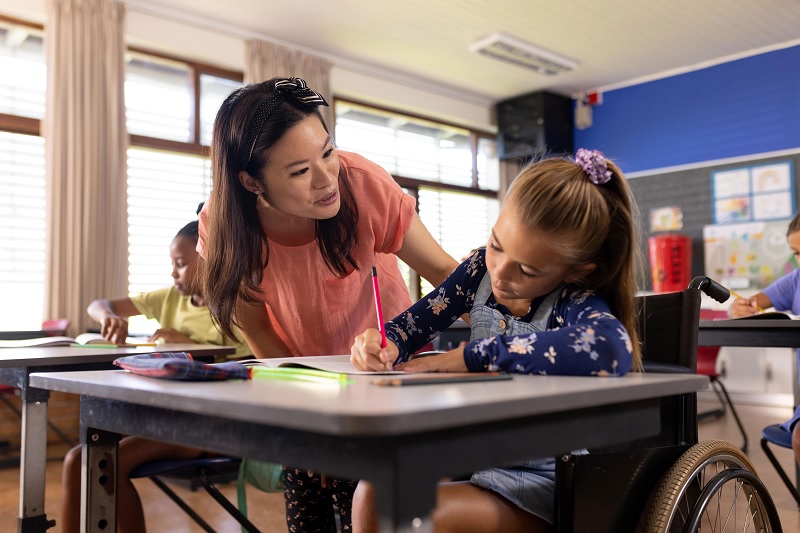

For generations, educational models operated on a rigid assembly-line philosophy. Students were expected to conform to a standardized curriculum delivered at a uniform pace, evaluated through identical testing mechanisms. Those who struggled to keep up or whose cognitive processing styles deviated from the norm were frequently segregated into specialized classrooms or left behind entirely. This traditional approach overlooked a fundamental truth of human development: cognitive diversity is the natural state of humanity. Every learner processes information, expresses understanding, and navigates academic environments through a unique lens.
Inclusive education dismantles the historical barriers of segregation, advocating for a shared learning ecosystem where students of all abilities, backgrounds, and neurotypes learn side by side in general education classrooms. Far beyond a mere ideological or social initiative, true inclusion is a transformative pedagogical framework. When executed with intentionality, inclusive education creates a dynamic environment that fosters academic growth, emotional resilience, and social empathy, benefiting every student within the classroom walls, regardless of their specific learning needs.
The Philosophy and Core Principles of Inclusion
To understand why inclusive education yields such powerful outcomes, one must first distinguish it from outdated integration models. In historical integration settings, a student with a learning disability or neurodivergence was placed into a general education classroom, but the burden fell entirely on the student to adapt to an inflexible curriculum. If the student could not keep pace, they received minimal support or were pulled out of the room.
True inclusion shifts that burden of adaptation from the student to the educational environment. The classroom design, instructional methods, assessment strategies, and physical spaces adapt to accommodate the diverse learners inhabiting them. This philosophy rests on the belief that general education classrooms should reflect the rich diversity of the real world. By embedding support systems directly into the primary learning environment, schools eliminate the stigma associated with pull-out programs and ensure that every child feels a genuine sense of belonging and community ownership.
Universal Design for Learning: The Engine of Inclusive Classrooms
Implementing inclusive education effectively requires moving away from the “one-size-fits-all” lecture format toward flexible, responsive instructional design. The most successful framework guiding this transformation is Universal Design for Learning. Originally adapted from architectural principles that mandate ramps and automatic doors for physical accessibility, UDL applies the same foresight to cognitive and sensory accessibility.
UDL operates on three core principles that revolutionize how teachers deliver content, engage students, and measure understanding.
Multiple Means of Engagement
Not all students are motivated by the same incentives or teaching formats. Some learners thrive in competitive collaborative group projects, while others require quiet, independent contemplation to connect with a topic. Inclusive classrooms provide diverse entry points for engagement, allowing students to choose project formats or investigative pathways that align with their strengths while gently challenging them to stretch into unfamiliar territory.
Multiple Means of Representation
Information cannot be locked behind a single sensory format. A student with dyslexia may struggle to comprehend a dense historical text, yet they possess brilliant analytical reasoning when that same information is presented through audio narration, data visualization, or documentary film. Inclusive educators utilize diverse media formats, combining text, visual diagrams, tactile manipulatives, and auditory explanations so that every student can access core concepts regardless of reading level or sensory processing differences.
Multiple Means of Expression
Traditional education relies heavily on written essays and timed exams to gauge mastery, accidentally penalizing students who possess profound understanding but struggle with executive dysfunction, motor coordination, or expressive language processing. Inclusive classrooms offer flexible assessment models. Students might demonstrate mastery through a digital presentation, a building project, an oral defense, an artistic creation, or a structured debate, ensuring that the evaluation measures actual comprehension rather than compliance with a specific medium.
Academic Benefits for Students With Diverse Needs
The most immediate impact of inclusive education is seen in the academic trajectory of students with diagnosed learning differences, physical disabilities, and neurodivergent profiles, such as autism spectrum conditions, ADHD, or specific processing disorders.
When placed in an inclusive environment supported by specialized educators, speech therapists, and adapted materials, these students consistently outperform their peers in segregated special education settings across standardized academic metrics. The presence of neurotypical and neurotypical-adjacent peers provides strong behavioral, linguistic, and academic role models. Students absorb complex social cues, advanced vocabulary, and collaborative problem-solving strategies simply by working alongside diverse classmates. Furthermore, the high academic expectations maintained in general education classrooms prevent students with learning differences from being subjected to watered-down curricula that limit their intellectual development.
The Unspoken Advantage: Fostering Empathy and Social Growth in Neurotypical Peers
Inclusive education is frequently championed for how it supports marginalized or neurodivergent learners, but its benefits for neurotypical, typically developing students are equally profound. Growing up in a homogenous classroom isolates children from the true diversity of the human experience, breeding intolerance and rigid thinking.
When children share a daily learning environment with peers who use assistive communication devices, move with mobility aids, process instructions differently, or exhibit diverse emotional regulation strategies, diversity ceases to be an abstract concept found in textbooks. It becomes a normal, lived reality.
Research consistently demonstrates that students educated in inclusive settings develop higher levels of emotional intelligence, perspective-taking, and social empathy. They learn how to communicate across differences, offer genuine peer support, and challenge exclusionary behaviors. These children grow into adults who are remarkably adaptable, collaborative, and free from the unconscious biases that often plague workplaces and communities lacking exposure to neurodiversity.
Overcoming Challenges in Implementation
Despite the overwhelming pedagogical benefits of inclusive education, transforming the traditional school model is a complex undertaking that requires systemic institutional support. Passionate teachers cannot build truly inclusive environments without adequate resources, professional development, and collaborative planning time.
Training and Professional Development
Many veteran educators entered the profession through training programs that treated special education and general education as entirely separate silos. Preparing modern educators requires comprehensive pre-service and ongoing professional development focused on differentiated instruction, assistive technology integration, behavioral support, and collaborative co-teaching models. When general education teachers and special education specialists partner as equal co-teachers in a shared classroom, the resulting synergy elevates instruction for every student in the room.
Resource Allocation and Class Sizes
Inclusion cannot succeed if it is used merely as a cost-cutting measure to justify packing oversized classrooms with minimal support staff. Effective inclusion requires manageable class sizes, accessible physical architecture, specialized assistive technology tools, and dedicated paraprofessionals who can assist students with high-support needs without disrupting the collective learning environment. Investing in these resources is an investment in the overall resilience and capability of the entire school ecosystem.
Embracing a Culture of Belonging
Education is fundamentally about preparing human beings to navigate a complex, interconnected, and diverse world. Segregating students based on real or perceived learning differences sends a damaging message that diversity is a disruption to be managed rather than a strength to be embraced.
Inclusive education tears down these artificial divisions. By anchoring instructional design in flexibility, empathy, and high expectations, inclusive schools honor the dignity of every learner. When students of all abilities collaborate, struggle, and succeed together, they do not just master academic subjects; they learn the foundational art of living and thriving in a shared human community.

Comments are closed.