
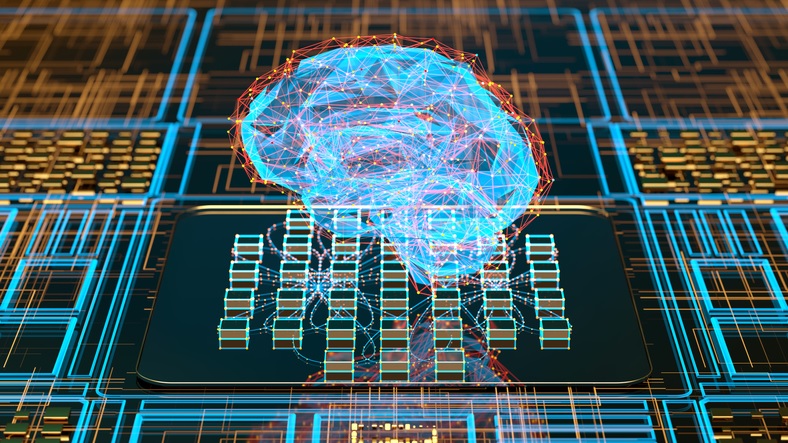

For decades, the technology industry has operated under the reliable rhythm of Moore’s Law, packing ever more transistors onto flat sheets of silicon to drive exponential leaps in processing power. But as we push the physical limits of atomic-scale manufacturing, this predictable trajectory is hitting a wall. At the same time, the explosion of artificial intelligence is demanding computational resources at an unprecedented, environmentally unsustainable scale. To continue advancing, the hardware industry cannot simply build faster versions of the same old processors. It must fundamentally rethink how a computer computes.
To find the blueprint for this next era of hardware, engineers are looking toward the most efficient, sophisticated processing engine in the known universe: the human brain. This biological inspiration has birthed a revolutionary paradigm known as neuromorphic computing. By engineering microchips that physically replicate the neural structures of the brain, developers are creating hardware that operates with a fraction of the energy while processing dynamic, real-world data with astonishing speed.
The Core Problem: Escaping the Von Neumann Bottleneck
To understand why neuromorphic computing is necessary, we must first understand the flaw in how virtually all modern computers operate. Since the 1940s, computers have been built using the Von Neumann architecture. In this traditional setup, the processing unit (the CPU or GPU) and the memory (RAM) are physically separated.
When a traditional computer performs a task, it must constantly shuttle data back and forth between the memory module and the processor across a microscopic highway known as a bus. This constant ferrying of data creates a severe traffic jam called the Von Neumann bottleneck. It restricts overall processing speed and, more importantly, consumes a massive amount of electrical power. In many modern AI applications, moving the data uses significantly more energy than the actual mathematical computation itself.
The human brain does not suffer from this bottleneck. In biological neural networks, memory and processing are not separated; they happen in the exact same place. Our brain contains roughly 86 billion neurons interconnected by trillions of synapses. These synapses act as both the data storage and the computational engine simultaneously. Neuromorphic chips are designed to replicate this exact co-location, eliminating the data transit entirely and drastically reducing power consumption.
Inside the Architecture of Neuromorphic Chips
Designing a chip that thinks like a biological brain requires abandoning the rigid, clock-driven operations of traditional processors. Standard computer chips operate synchronously. A central internal clock dictates that all parts of the chip must step forward together, executing calculations in a rigid sequence millions of times per second. Even when parts of the chip have no active work to do, they are still awake, drawing power and generating heat.
Spiking Neural Networks
Neuromorphic computing introduces a radically different software and hardware interplay primarily through Spiking Neural Networks (SNNs). Unlike traditional artificial neural networks—which are currently driving massive language models and require continuous decimal values to be calculated across every layer—SNNs operate on discrete, sparse events.
In a biological brain, a neuron only fires an electrical spike when its internal voltage reaches a specific threshold. If there is no stimulus, the neuron remains quiet. Neuromorphic chips mimic this through an event-driven architecture. The silicon neurons on the chip operate asynchronously. They sit completely dormant, drawing almost zero power, until they receive a specific input or “spike” from a neighboring neuron. They process that spike, pass the information along, and immediately go back to sleep.
Massively Parallel Processing
Because neuromorphic chips do not rely on a central clock or a centralized memory bank, they can process millions of different stimuli simultaneously. This is known as massively parallel processing. If a neuromorphic visual sensor is watching a highway, it doesn’t process the empty, unchanging sky frame by frame like a standard camera. The specific silicon neurons responsible for tracking a moving car will fire rapidly, while the neurons monitoring the static background remain completely silent. This selective firing mimics how human eyes and brains process the world, prioritizing dynamic changes over static environments.
The Energy Imperative: Solving the AI Power Crisis
The current trajectory of artificial intelligence is creating a looming energy crisis. Training a single high-tier large language model can consume the equivalent energy required to power thousands of homes for a year. The massive data centers built to support cloud-based AI rely on sprawling arrays of GPUs that require dedicated cooling infrastructure just to prevent the silicon from melting.
Contrast this with the human brain, which performs complex pattern recognition, natural language processing, motor control, and sensory integration simultaneously, all while running on about 20 watts of power—roughly the energy required to light a dim household bulb.
Neuromorphic computing offers a pathway to close this staggering efficiency gap. By leveraging localized memory and event-driven spiking networks, these bio-inspired chips can perform specific AI tasks using up to a thousand times less energy than conventional GPUs. This energy efficiency is not merely a cost-saving measure; it is the fundamental requirement for embedding advanced artificial intelligence into portable, battery-powered devices.
Transforming Industries Through Edge Computing
The true power of neuromorphic hardware becomes apparent when AI needs to leave the data center and interact with the physical world. This concept, known as edge computing, involves placing the processing power directly on the device rather than sending data to the cloud.
Autonomous Vehicles and Drones
Self-driving cars and autonomous drones must process an overwhelming amount of sensory data in real time. If a drone is navigating a dense forest, it cannot afford the latency of beaming video feeds to a remote server, waiting for a conventional neural network to process the data, and receiving an instruction to dodge a branch. The delay of even a few milliseconds can result in a crash.
Neuromorphic chips allow these autonomous systems to process sensory inputs natively and instantly. Because the chips consume so little power, they can be deployed in lightweight drones without draining the battery, enabling extended flight times and immediate reflex-like responses to environmental obstacles.
Advanced Robotics and Prosthetics
In the field of robotics, neuromorphic engineering is paving the way for machines that can interact with unpredictable environments. Traditional robots are excellent at performing highly repetitive tasks in controlled factories, but they struggle with tasks that require adaptive tactile feedback, like picking up a fragile piece of fruit.
By utilizing neuromorphic sensors that mimic human skin—sending spikes of data only when pressure or texture changes—robotic hands can process tactile information instantly. This localized processing is also revolutionizing the development of smart prosthetics. Future prosthetic limbs equipped with neuromorphic processors will be able to interpret biological nerve signals from the user and translate them into fluid, natural mechanical movements without the need for bulky battery packs.
Overcoming the Hurdles to Mainstream Adoption
Despite the immense promise, neuromorphic computing is still transitioning from the research laboratory into commercial ubiquity. The hardware itself is only one half of the equation; the most significant barrier to widespread adoption is the software ecosystem.
The entire modern software industry is built on traditional, clock-driven programming languages and frameworks. The tools that developers use to build today’s machine learning models are designed for conventional GPUs. Writing software for a decentralized, asynchronous, spiking neural network requires a completely different mathematical approach. We are currently facing a severe shortage of engineers trained in neuromorphic programming.
Furthermore, manufacturing these highly specialized chips at a commercial scale presents unique fabrication challenges. Integrating new materials that better mimic analog synaptic behavior, such as memristors (resistors that remember their state even when powered off), requires retooling multi-billion-dollar semiconductor foundries. The industry is currently engaged in a massive effort of hardware-software co-design, building the specialized compilers and programming frameworks necessary to make these brain-inspired chips accessible to everyday developers.
The Future of Machine Intelligence
We are standing at the precipice of a foundational shift in computer science. For seventy years, we have forced software to conform to the rigid, mathematical limitations of the Von Neumann architecture. Neuromorphic computing flips this dynamic entirely, shaping the physical hardware to match the organic fluidity of the natural world.
As these bio-inspired chips move out of the lab and into our devices, they will quietly transform our relationship with technology. We will see smart devices that truly understand their environments in real time, medical implants that monitor our health seamlessly for years on a single charge, and autonomous systems that navigate the world with the intuitive grace of a living organism. By looking inward at the architecture of our own minds, we are finally building the hardware necessary to unlock the true potential of artificial intelligence.

Comments are closed.